


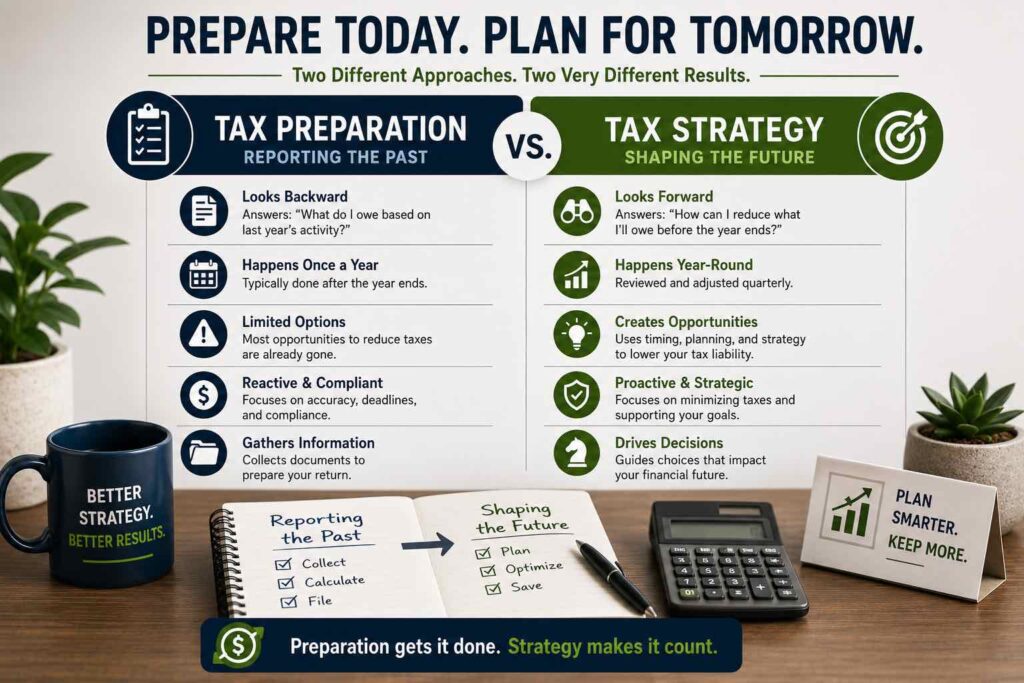
The Difference Between Tax Preparation and Tax Strategy
Most business owners think they’re “doing tax planning.”
In reality, they’re doing tax preparation—and there’s a big difference.
One is about reporting what already happened.
The other is about shaping what happens next.
If you don’t understand the difference, you’re likely leaving money on the table every year.
What Is Tax Preparation?
Tax preparation is the process of:
- Gathering financial documents
- Calculating your tax liability
- Filing accurate returns with the IRS
It answers one question:
“What do I owe based on last year’s activity?”
By the time you’re preparing your taxes, the year is over.
Your income is earned. Your expenses are recorded.
At that point, your options are limited.
What Is Tax Strategy?
Tax strategy is proactive.
It involves:
- Planning throughout the year
- Structuring income and expenses intentionally
- Making decisions with tax impact in mind
It answers a different question:
“How can I reduce what I’ll owe before the year ends?”
That’s where real savings happen.
The Core Difference
Here’s the simplest way to understand it:
- Tax preparation = looking backward
- Tax strategy = planning forward
Or put another way:
Tax\ Preparation = Reporting\ the\ Past
Tax\ Strategy = Shaping\ the\ Future
Both matter—but they serve very different purposes.
Why Tax Preparation Alone Isn’t Enough
Relying only on tax prep can lead to:
1. Missed Opportunities
Many tax-saving strategies must be implemented before year-end.
If you’re only addressing taxes during filing season, those opportunities are gone.
2. Reactive Decision-Making
Without a plan, decisions are made without considering tax impact.
This often results in:
- Higher tax bills
- Poor timing of income or expenses
3. Unpredictable Outcomes
When taxes aren’t planned, they feel like a surprise every year.
That makes it harder to:
- Manage cash flow
- Plan investments
- Pay yourself consistently
What Tax Strategy Actually Looks Like
A true tax strategy is ongoing and integrated into your business.
It includes:
1. Quarterly Planning
Reviewing your financials regularly and adjusting based on performance.
2. Income and Expense Timing
Deciding when to recognize income or accelerate expenses.
3. Entity Optimization
Choosing the right business structure for tax efficiency.
4. Retirement and Investment Planning
Using tax-advantaged accounts to reduce taxable income.
5. Forecasting and Projections
Estimating your tax liability before the year ends—so you can act on it.
A Real-World Example
Let’s say your business has a strong year.
With Tax Preparation Only:
- You find out your tax bill in March
- You owe more than expected
- There’s little you can do to reduce it
With Tax Strategy:
- You identify the increase mid-year
- You implement deductions or adjust income timing
- You reduce your liability before year-end
Same business. Very different outcome.
Why Most Business Owners Miss This
Because many accountants focus primarily on compliance.
They:
- File returns
- Ensure accuracy
- Meet deadlines
All important—but not the same as strategic planning.
What to Look for Instead
If you want real tax savings, look for a proactive approach that includes:
- Regular check-ins throughout the year
- Forward-looking advice
- Clear communication about opportunities
- Integration with your overall financial strategy
The Bigger Picture
Taxes are often one of your largest expenses.
But unlike rent or payroll, you have significant control over how much you pay—if you plan ahead.
Tax preparation ensures you stay compliant.
Tax strategy helps you optimize.
Final Thought
If you’re only thinking about taxes once a year, you’re already behind.
The goal isn’t just to file correctly.
It’s to structure your business and decisions in a way that minimizes what you owe—legally and strategically.
Working with a proactive advisor like STR CPA Firm can help you move beyond basic preparation and build a tax strategy that supports your growth, cash flow, and long-term wealth.