

The Real Reason Most Budgets Fail (and What to Do Instead)
Every business owner has tried a budget at some point.
You map out your expected revenue, estimate expenses, set targets—and for a few weeks, it works.
Then reality hits:
- Expenses don’t follow the plan
- Revenue fluctuates
- The budget gets ignored
Eventually, it becomes just another document you don’t use.
So what’s the real problem?
Most budgets don’t fail because they’re wrong.
They fail because they’re unrealistic—and disconnected from behavior.
The Traditional Budgeting Problem
Most budgets are built like this:
Planned\ Revenue – Planned\ Expenses = Expected\ Profit
It’s logical. Structured. Clean.
But it assumes:
- You can predict everything accurately
- You’ll stick to the plan perfectly
- Your business won’t change
None of those are true.
Business is dynamic—and rigid budgets don’t adapt well.
Why Most Budgets Break Down
1. They’re Built Once…Then Ignored
Budgets are often created:
- At the start of the year
- During planning sessions
…and then never revisited.
Without regular updates, they quickly become irrelevant.
2. They Don’t Reflect Real Behavior
On paper, it’s easy to say:
- “We’ll keep expenses at 30%”
- “We’ll limit discretionary spending”
But when opportunities or pressures arise, behavior takes over.
Budgets that ignore human tendencies rarely hold up.
3. They Focus on Control, Not Flexibility
Traditional budgets try to control spending.
But business requires:
- Adaptability
- Quick decision-making
- Strategic investment
A rigid budget can actually slow you down—or cause you to miss opportunities.
4. They Don’t Account for Cash Flow Timing
Even if your budget is technically accurate, it may not reflect:
- When cash actually comes in
- When expenses hit your account
This leads to:
- Short-term cash shortages
- Confusion about what you can afford
5. They Lack Clear Action Triggers
Most budgets don’t answer:
- What do I do if we go over?
- What changes if revenue drops?
- When should I adjust spending?
Without clear rules, the budget becomes passive—not actionable.
What to Do Instead: Build a System That Works
The solution isn’t better budgeting—it’s better financial management.
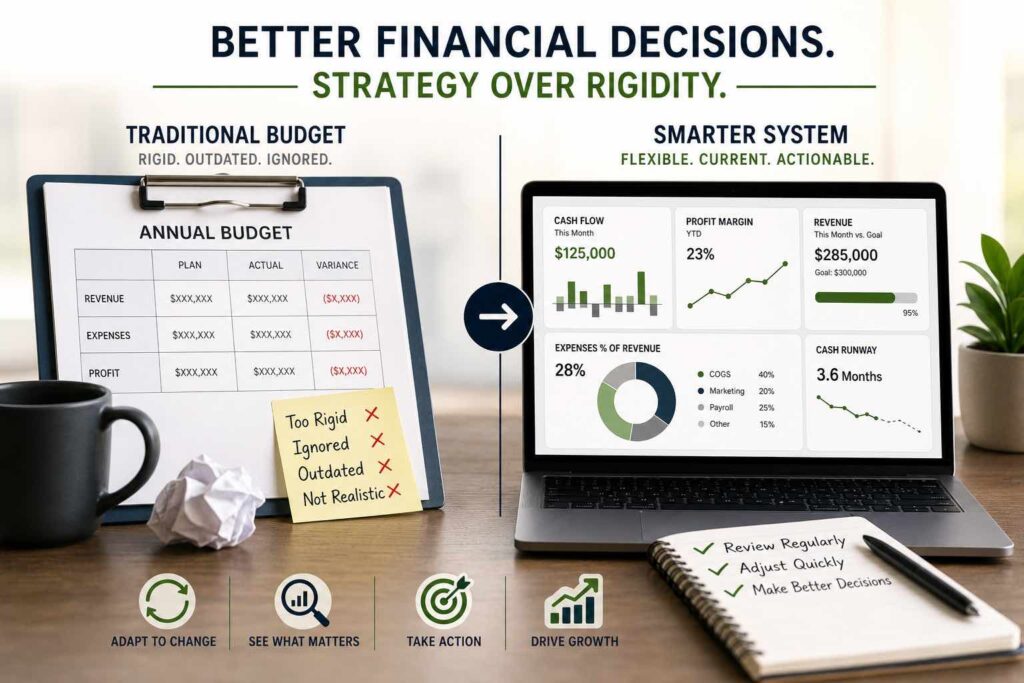
1. Shift From Static to Dynamic Planning
Instead of a fixed annual budget:
- Review and adjust monthly
- Update projections based on actual performance
- Treat your plan as a living document
This keeps your numbers relevant.
2. Use Percentage-Based Targets
Rather than fixed dollar amounts, use ranges:
- Expenses as % of revenue
- Profit margin targets
- Allocation percentages for key categories
This allows your business to scale while maintaining balance.
3. Focus on Cash Flow First
Your ability to operate depends on cash—not projections.
Track:
- Cash inflows and outflows
- Upcoming obligations
- Available reserves
This gives you a real-time view of what’s possible.
4. Create Spending Rules
Instead of relying on willpower, define clear guidelines:
- When you can invest in growth
- When to reduce expenses
- How much buffer you need before making big decisions
Rules reduce emotional decision-making.
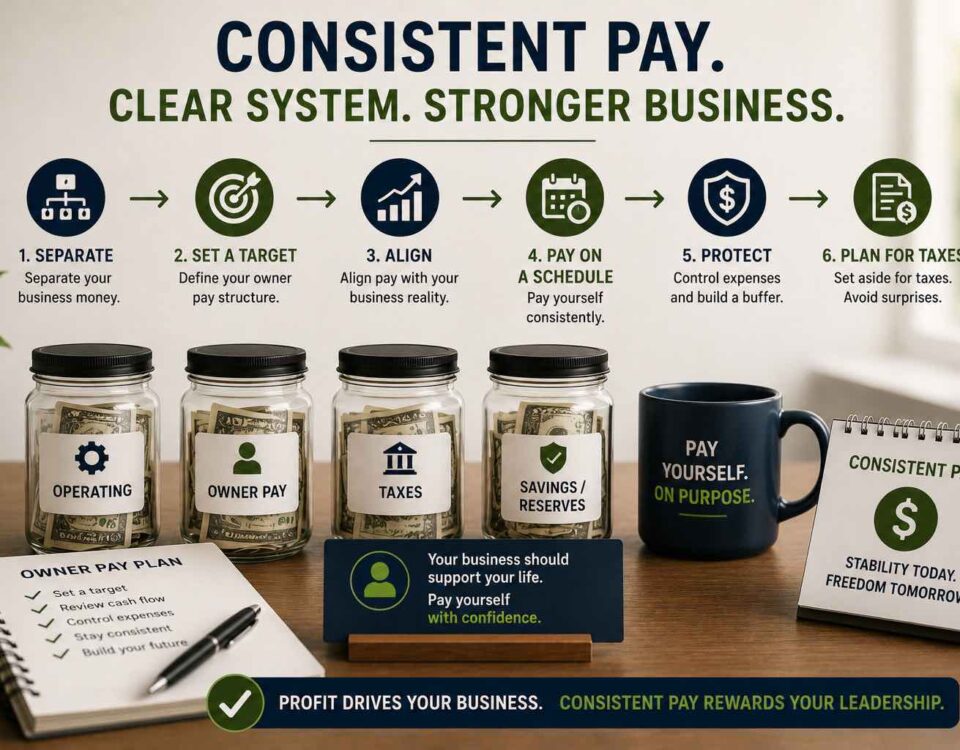
5. Separate Your Money
Structure creates discipline.
Consider dividing funds into:
- Operating expenses
- Taxes
- Owner pay
- Savings or reserves
This ensures money is used intentionally—not reactively.
6. Review Consistently
Set a rhythm:
- Weekly cash check-ins
- Monthly performance reviews
Consistency turns your system into a habit.
What a Better System Feels Like
When you move beyond traditional budgeting, you’ll notice:
- Less stress about unexpected expenses
- More confidence in your decisions
- Clearer understanding of what you can afford
- Greater control over profit and cash flow
It’s not about predicting everything—it’s about being prepared for anything.
The Key Shift
The real problem isn’t that budgets are useless.
It’s that they’re often treated as the solution.
In reality, they’re just a tool—and not always the best one.
The better approach is:
Flexible planning + consistent tracking + intentional decision-making
Final Thought
Most budgets fail because they try to control a business that’s constantly changing.
Instead of forcing your business into a rigid plan, build a system that adapts with it.
Because the goal isn’t to follow a budget perfectly…
It’s to make better financial decisions—consistently.
If you want help creating a financial system that actually works in real life, working with a proactive advisor like STR CPA Firm can help you replace rigid budgeting with a strategy that supports growth, stability, and long-term success.