

One of the most common frustrations business owners face isn’t revenue…
It’s not knowing when—or how much—they can pay themselves.
Some months are strong. Others feel tight. And often, the business gets paid first… while the owner gets whatever is left.
That’s not sustainable.
If your business is working, you should be getting paid consistently. Here’s how to make that happen.
Why Paying Yourself Feels So Inconsistent
Even profitable businesses struggle with owner pay.
Why?
- Cash flow fluctuates
- Expenses aren’t controlled
- There’s no clear system for allocation
- Everything runs through one account
Without structure, income becomes unpredictable—even when the business is doing well.
The Key Shift
Most owners operate like this:
Revenue – Expenses = Owner\ Pay
They pay expenses first… and take whatever is left.
The problem?
There’s rarely much left.
Instead, you need to flip the mindset:
Revenue – Owner\ Pay = Expenses
Owner pay becomes intentional—not optional.
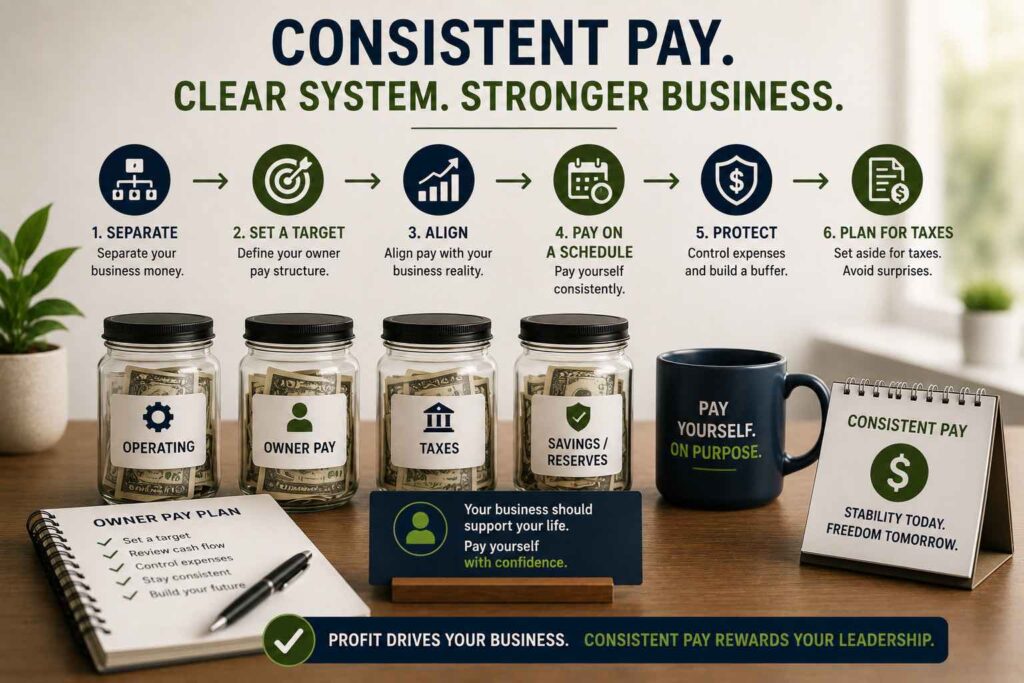
Step 1: Separate Your Money
If everything flows through one account, it’s impossible to create consistency.
Start by separating:
- Operating expenses
- Owner pay
- Taxes
- Savings or reserves
This creates clarity and prevents accidental overspending.
Step 2: Set a Target Pay Structure
Decide how you want to be paid.
This might include:
- A fixed monthly salary
- A percentage of revenue
- A combination of salary + profit distributions
The key is consistency—not perfection.
Step 3: Align Pay With Reality
Your business needs to support your compensation.
Review:
- Average monthly revenue
- Profit margins
- Cash flow patterns
Then set a pay level your business can sustain—even during slower periods.
Step 4: Pay Yourself on a Schedule
Consistency builds stability.
Instead of random withdrawals:
- Pay yourself weekly, biweekly, or monthly
- Treat it like payroll
This creates predictability—for both you and your business.
Step 5: Control Expenses to Protect Your Pay
If expenses expand freely, your pay becomes unstable.
Set boundaries:
- Define acceptable expense ranges
- Review spending regularly
- Cut or adjust when needed
Your income shouldn’t fluctuate just because spending does.
Step 6: Build a Buffer
A cash reserve smooths out variability.
This allows you to:
- Maintain consistent pay during slower months
- Avoid dipping into personal funds
- Make decisions without pressure
Even a small buffer can make a big difference.
Step 7: Plan for Taxes
One of the biggest reasons owner pay feels inconsistent?
Unexpected tax bills.
Avoid this by:
- Setting aside a percentage of revenue
- Reviewing your tax position regularly
- Planning ahead for payments
This keeps your take-home income predictable.
Common Mistakes to Avoid
❌ Paying Yourself Last
If you’re always “waiting to see what’s left,” you’ll always be inconsistent.
❌ Taking Random Distributions
Irregular withdrawals create instability and confusion.
❌ Ignoring Cash Flow
Even with a plan, you need to monitor cash to ensure sustainability.
❌ Mixing Business and Personal Finances
This blurs the line and makes it harder to track what you’re actually earning.
What Consistent Pay Changes
When you pay yourself consistently, you’ll notice:
- Reduced financial stress
- Better personal financial planning
- Increased confidence in your business
- Clearer separation between business and personal life
It’s not just about money—it’s about control.
The Bigger Picture
Your business isn’t just meant to generate revenue.
It’s meant to support your life.
Consistent owner pay is one of the clearest signs your business is working the way it should.
Final Thought
If your income feels unpredictable, the issue isn’t just revenue—it’s structure.
With the right systems in place, you can turn inconsistent withdrawals into reliable income.
Because at the end of the day, success isn’t just what your business makes…
It’s what you actually keep and take home.
If you want help building a system that supports consistent owner pay, working with a proactive advisor like STR CPA Firm can help you create a strategy that balances stability, growth, and long-term financial success.